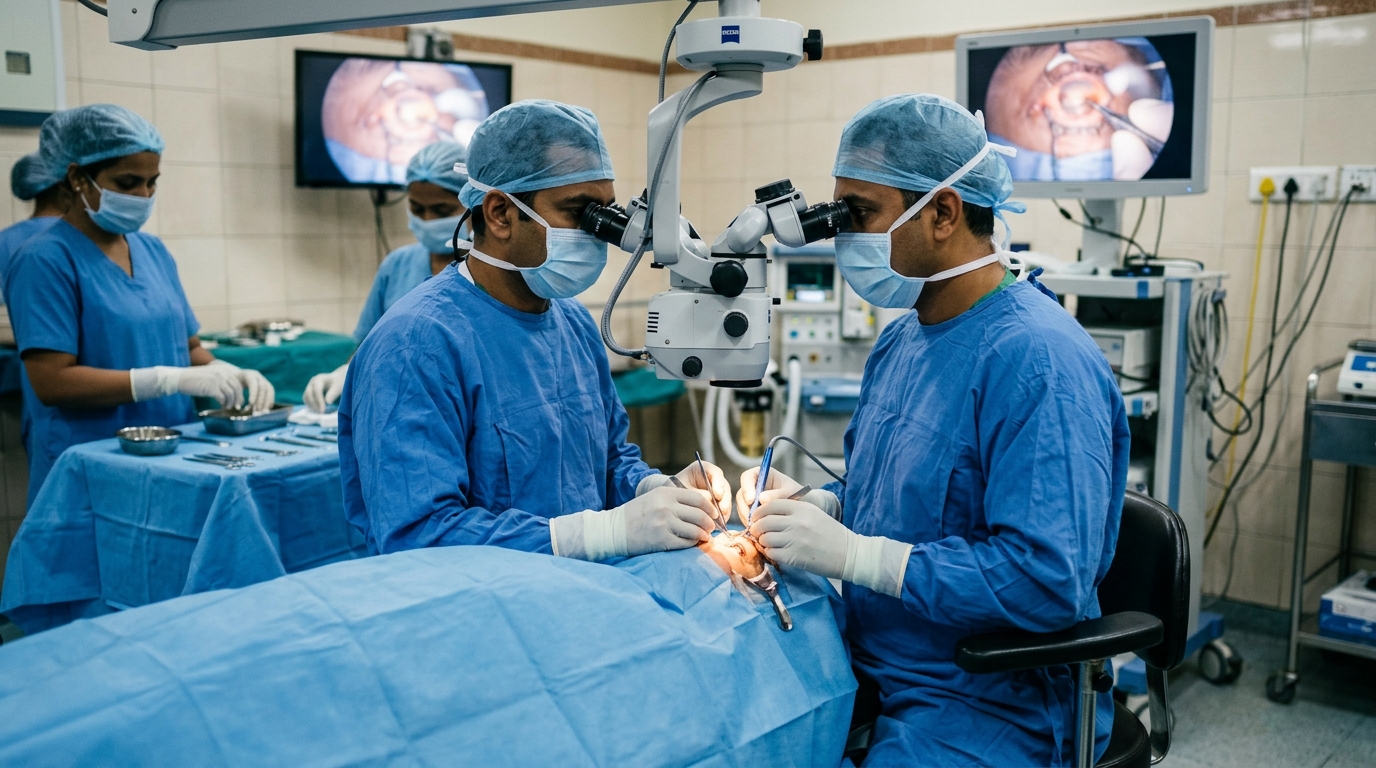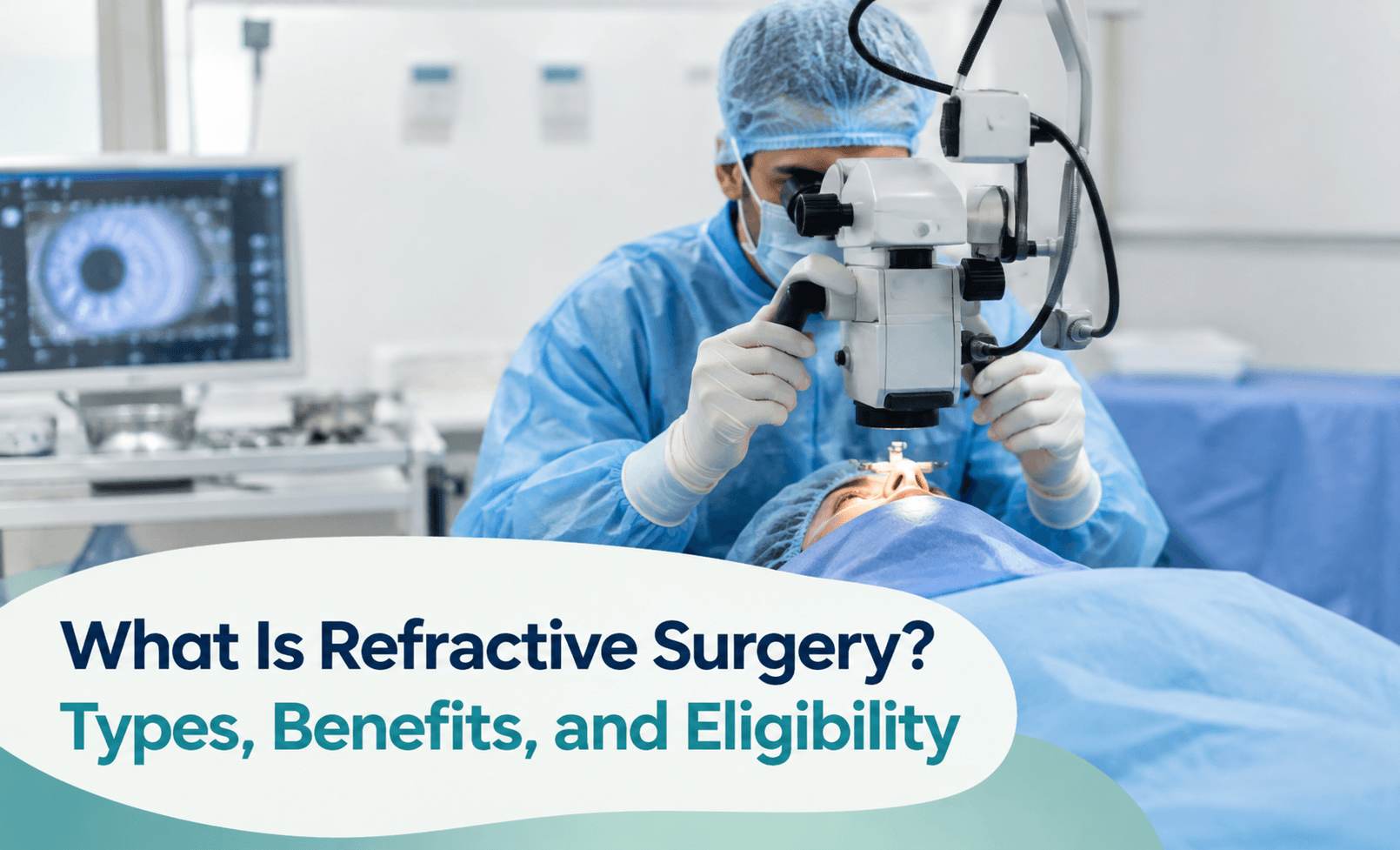
This article explains refractive surgery, the different types of laser eye surgery, eligibility requirements, and the potential benefits and risks. It also highlights Dr. Sahil Shah at Eye Vista Hospital, Ahmedabad, for personalised evaluation and guidance on vision correction options.
Clear vision makes everyday activities easier, from driving and reading to working on digital screens. However, people with refractive errors such as nearsightedness, farsightedness, or astigmatism often depend on glasses or contact lenses. Laser eye surgery offers a potential alternative by reshaping the cornea to help light focus correctly on the retina.
Refractive surgery has advanced considerably, with procedures designed to address different prescriptions, corneal conditions, and lifestyle needs. However, not everyone is suitable for the same treatment. Understanding the available options, their benefits, and the eligibility requirements can help you make an informed decision with an eye specialist.
What Is Refractive Surgery?
Refractive surgery refers to procedures that correct vision by changing the shape of the cornea or, in some cases, using an implanted lens. The goal is to reduce dependence on glasses or contact lenses by correcting refractive errors.
Common conditions addressed through refractive procedures include:
- Myopia: Difficulty seeing distant objects clearly.
- Hyperopia: Difficulty focusing on nearby objects.
- Astigmatism: Blurred or distorted vision caused by irregular corneal curvature.
Depending on your prescription and eye health, an ophthalmologist may recommend LASIK eye surgery, SMILE eye surgery, PRK eye surgery, or an alternative such as an implantable collamer lens (ICL).
Types of Laser Eye Surgery
Different procedures suit different eyes. Therefore, a detailed eye examination is essential before choosing laser vision correction.
1. LASIK Eye Surgery
LASIK involves creating a thin corneal flap and using a laser to reshape the underlying tissue. It is commonly used to correct myopia, hyperopia, and astigmatism. Many patients experience relatively quick visual recovery, although healing varies between individuals.
2. SMILE Eye Surgery
Small Incision Lenticule Extraction (SMILE) removes a small piece of corneal tissue through a tiny incision. This flap-free technique may be suitable for selected patients, particularly those with myopia and certain levels of astigmatism.
3. PRK Eye Surgery
Photorefractive keratectomy (PRK) reshapes the cornea without creating a flap. It may be considered for patients who are unsuitable for LASIK because of certain corneal characteristics. However, surface healing and visual recovery generally take longer.
Who Is Eligible for LASIK?
A common question among people considering refractive treatment is: who is eligible for LASIK? Suitability depends on more than age or spectacle power. An ophthalmologist must assess your prescription, corneal structure, and overall eye health.
You may be considered for laser vision correction if you:
- Are generally at least 18 years old, with a stable prescription.
- Have healthy corneas with suitable thickness and shape.
- Have a refractive error that can be safely corrected.
- Have no significant untreated eye conditions that could affect the outcome.
- Understand the potential benefits, limitations, and risks of surgery.
People with severe dry eye, keratoconus, unstable prescriptions, or certain other medical or eye conditions may not be suitable for LASIK. In some cases, an alternative procedure may be more appropriate.
A comprehensive assessment is the best way to determine your options.
What Are the Benefits of LASIK Eye Surgery?
The potential LASIK eye surgery benefits extend beyond convenience. For suitable candidates, the procedure can improve functional vision and make daily activities easier.
Key benefits may include:
- Reduced dependence on glasses or contact lenses.
- Improved uncorrected distance vision.
- Convenience during sports, travel, and outdoor activities.
- Relatively quick visual recovery after LASIK for many patients.
- Long-lasting correction of the treated refractive error.
Nevertheless, laser eye surgery does not guarantee perfect vision or eliminate the possibility of needing glasses in the future. Temporary dry eyes, glare, halos, and other complications can occur, so patients should discuss the risks with their surgeon.
Is Laser Eye Surgery Right for You?
Choosing the right treatment requires individual evaluation rather than relying on general recommendations. Your eye specialist may perform a refraction test, corneal mapping, corneal thickness measurements, and an assessment of tear-film health.
These tests help determine whether LASIK, SMILE, PRK, or another option is appropriate. They also help identify conditions that could increase surgical risks.
If you are exploring myopia treatment or want to reduce your dependence on corrective lenses, arrange a consultation before making a decision.
Explore Laser Eye Surgery in Ahmedabad
If you are considering laser eye surgery in Ahmedabad, Eye Vista Hospital offers specialised cornea and refractive care with modern diagnostic technology and an individualised approach to treatment.
Dr. Sahil Shah (MBBS, MS, FLVPEI), a cornea and refractive surgery specialist, evaluates patients for options including Contoura Vision LASIK and ICL. Whether you are exploring laser vision correction or need guidance about your eligibility, the focus is on recommending an option suited to your eyes and visual needs.
Book an appointment with Dr. Sahil Shah at Eye Vista Hospital to discuss your vision concerns and explore suitable treatment options.
Medical Disclaimer
This article is intended for general educational purposes and does not replace professional medical advice, diagnosis, or treatment. Eligibility, outcomes, and risks vary between individuals. Consult a qualified ophthalmologist for a comprehensive assessment before considering refractive surgery.
Experiencing Sudden Vision Changes or Eye Pain?
Symptoms like sudden curtain-like darkness, flashes of light, an explosion of floaters, or severe persistent eye pain warrant immediate attention.
Consult Dr. Sahil Shah at Eyevista
Get accurate diagnostic care with advanced ophthalmic technology at our Paldi clinic.

Dr. Sahil Shah
MBBS, MS, FLVPEI (Cornea & Refractive)
Dr. Sahil Shah is a fellow of the world-renowned L V Prasad Eye Institute (Hyderabad). He specializes in corneal transplants, keratoconus management, ocular surface reconstruction, and advanced refrac...
Clinical Conditions (Eyepedia)
Clinic Hours & Location
Monday – Saturday: 9:00 AM – 7:30 PM
Sunday: Closed (Emergency on call)
Paldi, Ahmedabad, Gujarat 380007