Learn the warning signs that indicate you should see an eye specialist, from blurry vision and eye strain to red-flag symptoms requiring emergency ophthalmic care.
Your eyes can inform you greatly about your state of health as far as your vision is concerned; however, all common eye illnesses do not come with signs that can be readily visible at first. Some diseases that affect the eyes may come up with such symptoms as difficulty in seeing things clearly, irritation of the eyes, reddening of the eyes or problems with focusing.
What Are the Signs That You Should See an Eye Specialist?
There is no need for one to wait until one experiences serious problems in order to visit an eye specialist. An eye specialist can be visited if there is any change in eyesight that recurs and starts affecting activities like driving, work, reading, and recognizing people.
Some of the key symptoms include:
- Blurry vision: Inability to see fine details clearly either up close or at distance.
- Difficulty seeing objects: Trouble focusing from a distant place or nearby reading materials.
- Repeated squinting: Straining the eyelids constantly to bring objects into focus.
- Eye strain or tired eyes: A heavy, fatigued sensation around the orbital area after screen work or reading.
- Recurring headaches: Chronic tension or brow ache arising while performing visual tasks.
- Pain, swelling, or redness: Inflammation, conjunctival congestion, or discomfort in or around the eyeball.
- Excessive tearing or secretion: Watery discharge or crusting that suggests dry eye syndrome or tear duct blockage.
- Increased light sensitivity (Photophobia): Squinting or discomfort in bright sunlight or oncoming headlights.
- Trouble seeing at night: Halos, glares, or diminished contrast sensitivity in dim lighting.
- Spots and flashes of light: Visual artifacts, floaters, or sudden lightning flashes in the peripheral vision field.
This does not necessarily indicate a serious condition in your eyes. A comprehensive eye examination will help you figure out if these symptoms have anything to do with refractive errors, dry eye syndrome, or an eye infection.
What Are Some Common Eye and Vision Problems?
Several conditions can affect vision at different stages of life. Refractive errors, including myopia (nearsightedness), hyperopia (farsightedness), and astigmatism, are among the common eye vision problems and may cause blurred vision or difficulty focusing.
Cataracts can slowly cloud one’s vision and make it harder to see at night or experience bothersome glares. Glaucoma affects the optic nerves due to elevated intraocular pressure, and early signs often go unnoticed without routine tonometry tests. There are also conditions that impact the retina, such as diabetic retinopathy and macular degeneration, affecting central or peripheral vision.
Dryness, infections, or allergies to the eye are also other common problems that require professional care from an ophthalmologist.
Understanding these common vision problems is useful, but symptoms alone cannot confirm which condition is responsible. A professional examination is necessary for an accurate diagnosis.
Which Eye Symptoms Need Urgent Attention?
Not all eye issues need to be attended to immediately, but there are red-flag symptoms that should never be delayed or ignored:
- Sudden blindness or dark curtain falling across one’s vision field
- An abrupt increase in floaters or lightning flashes of light
- Severe, sudden pain inside the eye accompanied by nausea
- Sudden onset of double vision (diplopia)
- Chemical splashes or foreign body trauma to the cornea
If any of the above mentioned symptoms occur, it is best to see an eye specialist immediately at our emergency clinic in Ahmedabad.
Do Older Adults Need More Frequent Eye Checkups?
Age increases the likelihood of developing specific ocular conditions. Common elderly eye conditions include cataracts, open-angle glaucoma, age-related macular changes (AMD), and dry eye syndrome, which can gradually diminish vision quality.
Elderly patients frequently experience difficulties in reading, intolerance to night glare, loss of contrast sensitivity, and peripheral vision limitations. Notably, some blinding diseases arise without early pain or outward signs.
It is essential to conduct annual comprehensive eye examinations, particularly if you have diabetes, hypertension, or a family history of glaucoma.
What Happens During an Eye Examination?
An eye exam is not limited to just finding out whether you need glasses. The eye specialist conducts a series of targeted diagnostic tests tailored to your symptoms and medical history:
- Visual Acuity Testing: Measuring how clearly you see letters or symbols from standard distances.
- Refraction Assessment: Determining the precise lens prescription for glasses or contact lenses.
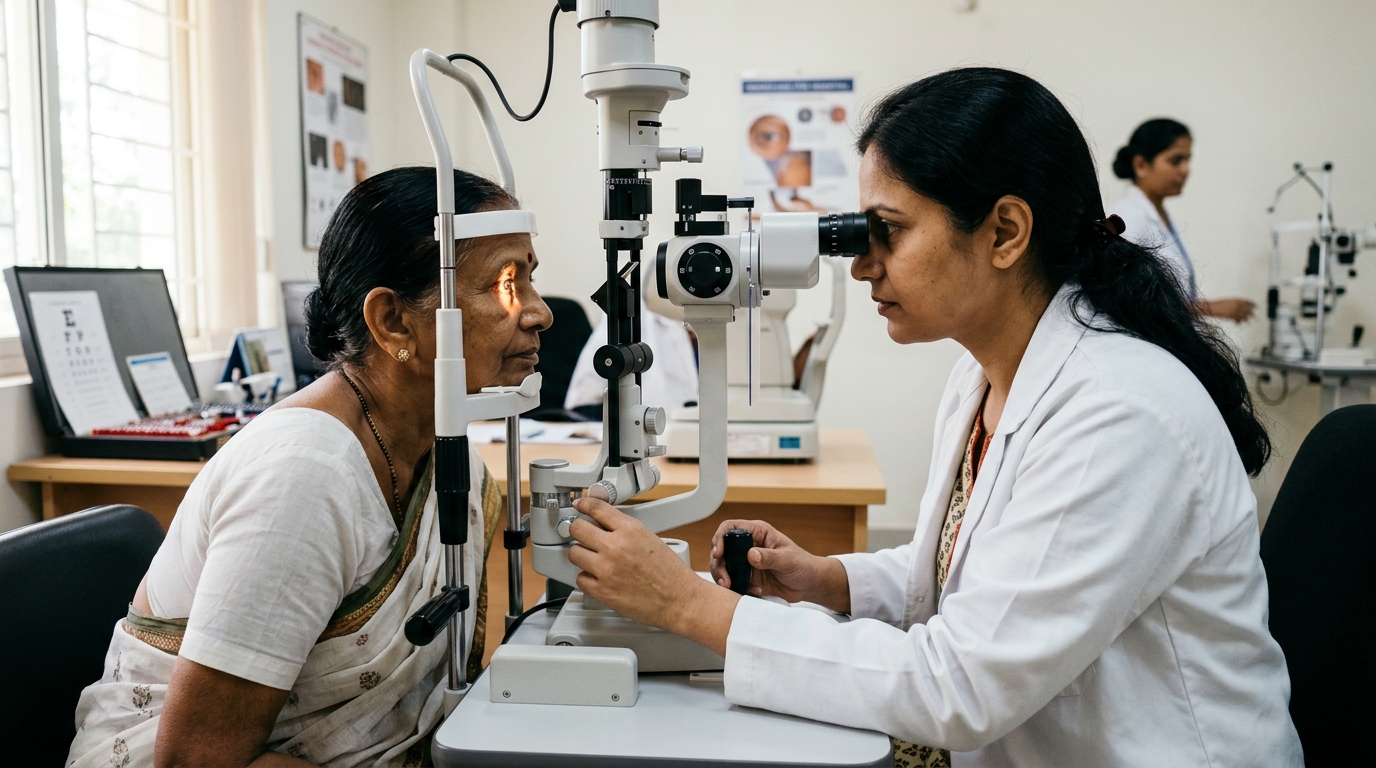
- Slit-Lamp Biomicroscopy: High-magnification inspection of the cornea, iris, anterior chamber, and lens.
- Tonometry: Non-contact or Goldmann applanation measurement of intraocular fluid pressure.
- Dilated Fundus Examination: In-depth examination of the retina, macula, and optic nerve head.
What Treatment May Be Recommended?
The best mode of treatment for eyes varies depending on the diagnosis and the patient’s lifestyle needs:
- Refractive Errors: Corrected using corrective lenses, spectacles, or advanced laser vision correction (LASIK, PRK, or Contoura Vision).
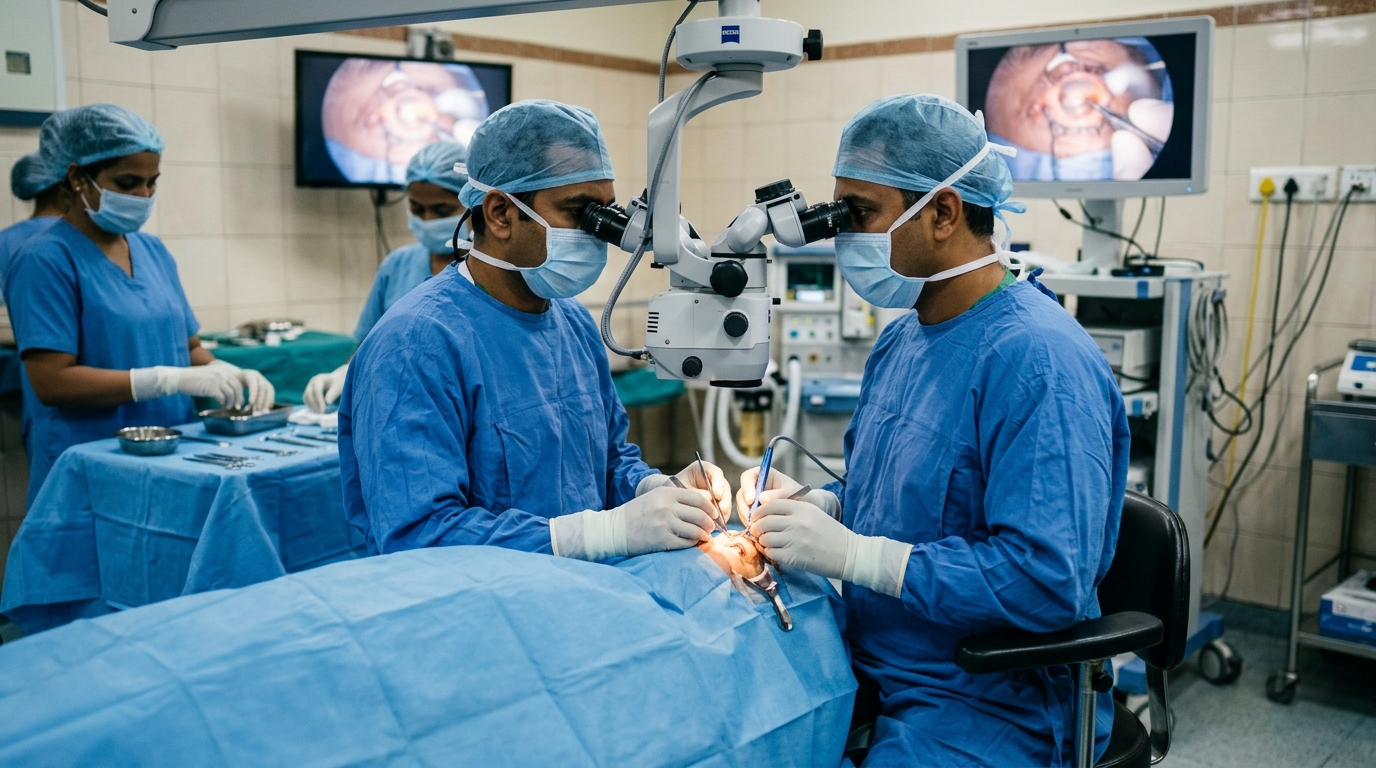
- Cataracts: Restored through micro-incision phacoemulsification (MICS) with customized monofocal, toric, trifocal, or EDOF intraocular lenses.
- Glaucoma: Managed with therapeutic pressure-lowering drops, selective laser trabeculoplasty (SLT), or filtration surgery.
- Corneal & Surface Diseases: Treated with targeted topical formulations, lubrication, punctal plugs, or corneal transplantation.
How Can You Know When to Book an Appointment?
A useful method is to evaluate whether your symptoms are recent, persistent, worsening, or interfering with your daily routine like driving, screen time, or reading. The list of eye symptoms is broad, and identical symptoms may stem from entirely different conditions. Rather than attempting to self-diagnose or use over-the-counter eyedrops, an ophthalmologist will be able to pinpoint the root cause with scientific precision.
Take the Right Step for Your Eye Health
Clear, comfortable vision is essential to quality of life. If you have observed blurriness, recurrent strain, night driving glare, or discomfort in your eyes, taking a timely step toward an accurate clinical evaluation protects your long-term sight.
If you are experiencing an eye problem or have concerns about your vision, schedule an appointment with Eyevista Eye Hospital. Contact our hospital team in Paldi, Ahmedabad at +91 98985 85799 to book a consultation with the appropriate eye specialist.
Experiencing Sudden Vision Changes or Eye Pain?
Symptoms like sudden curtain-like darkness, flashes of light, an explosion of floaters, or severe persistent eye pain warrant immediate attention.
Consult Dr. Pooja Y Patel at Eyevista
Get accurate diagnostic care with advanced ophthalmic technology at our Paldi clinic.

Dr. Pooja Y Patel
MBBS, MS (Ophthalmology), FAEH (Oculoplasty, Orbit & Ocular Oncology)
Dr. Pooja Y Patel completed fellowship training at Aravind Eye Hospital (Madurai). She is a leading specialist in eyelid reconstruction, lacrimal (tear duct) surgeries, ocular tumor management, and fa...
Clinical Conditions (Eyepedia)
Clinic Hours & Location
Monday – Saturday: 9:00 AM – 7:30 PM
Sunday: Closed (Emergency on call)
Paldi, Ahmedabad, Gujarat 380007