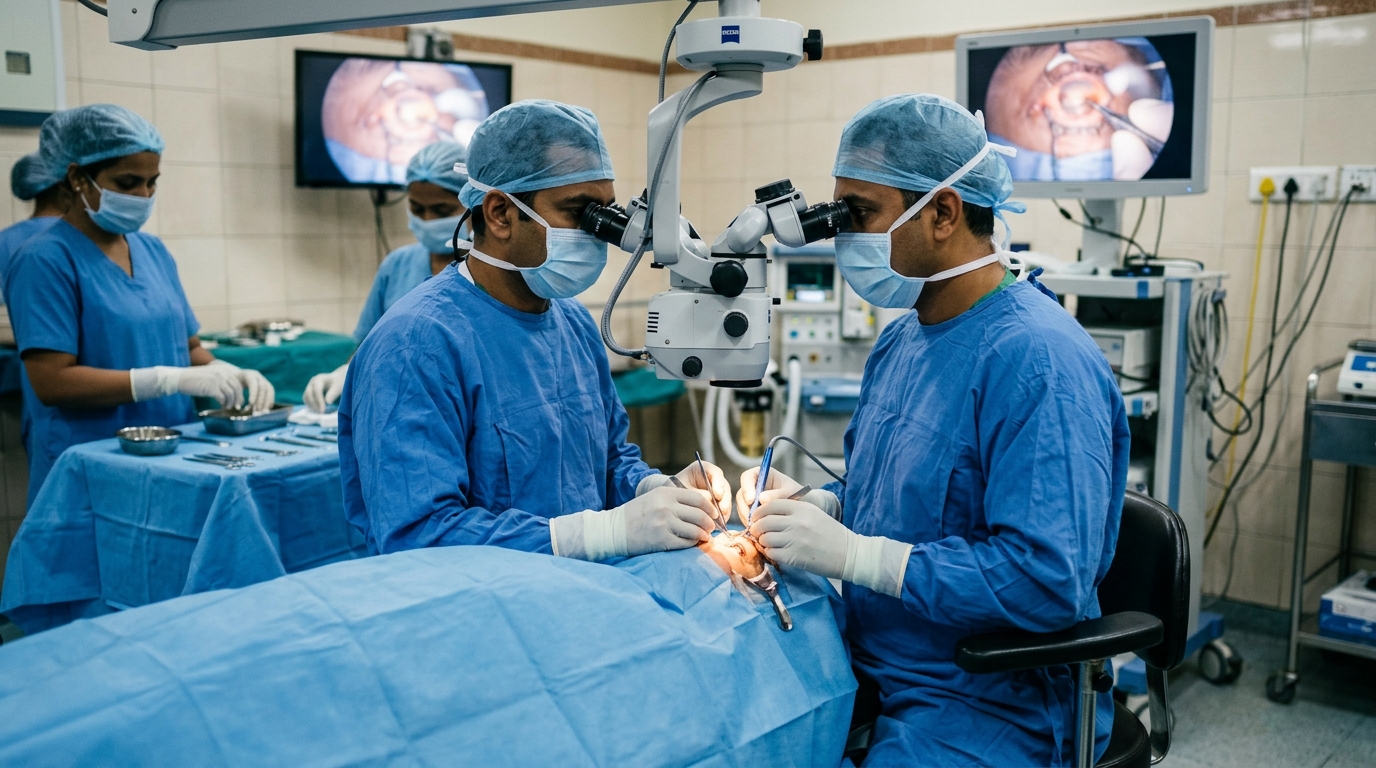
This article explains the role of a cornea specialist in diagnosing and treating conditions such as keratoconus, corneal infections, ulcers, and scarring. It covers treatment options, including medication, specialised contact lenses, corneal cross-linking, and corneal transplantation, while highlighting the importance of timely specialist care at Eye Vista Hospital.
Cornea refers to the transparent part of the eye that helps bend or refract light. Eye problems may be quite common, but in the case of a corneal problem, a patient may suffer from blurred vision, eye pain, eye redness, watery eyes, and light sensitivity. It is essential for patients to learn about the different types of cornea specialist treatment options provided by cornea specialist doctors for cornea problems so that they may be able to know when to visit a cornea specialist.
What Does a Cornea Specialist Treat?
A cornea specialist is an ophthalmologist who has additional training and specialization in the diagnosis and treatment of various conditions of the cornea. Other conditions may affect the front part of the eye. Conditions of the cornea may include infections, inflammations, allergies, dry eyes, erosions, ulcers, and scarring.
Common problems treated by a specialist include:
- Keratoconus and other corneal shape disorders
- Corneal infections and inflammation
- Corneal ulcers
- Corneal scars and injuries
- Corneal dystrophies
- Certain conditions affecting the corneal surface
- Conditions requiring corneal transplantation
The appropriate approach depends on a detailed examination and, when needed, corneal imaging.
What Are the Main Corneal Conditions Treated?
Keratoconus is one of the many diseases that need treatment from cornea specialists. In keratoconus, there is thinning of the cornea and formation of an unusual shape in the cornea. For Keratoconus eye problems there are various keratoconus treatments options are available for based on the level of the disease's development.
One of the common conditions requiring cornea specialist treatment options is keratoconus, in which the cornea becomes thinner and develops an irregular shape. Depending on progression, keratoconus treatment options may include glasses, specialised contact lenses, corneal cross-linking, or surgical procedures.
Infections can also affect the cornea. Corneal infection treatment depends on the underlying infection and may require prescription medication and close monitoring. A corneal ulcer can be particularly serious, making timely corneal ulcer treatment important to protect the eye and vision.
When Is Corneal Surgery Considered?
A corneal eye condition is one of those eye-related conditions that may require more than just medication or vision correction, and to treat it you’ll need to check various corneal specialist treatment options, which can improve your eye's corneal shape, improve weakened tissues, remove some other challenges, and may replace very severely damaged corneal tissues.
For progressive keratoconus, corneal cross-linking treatment can help strengthen the cornea and reduce further progression in appropriate patients. More advanced disease or severe corneal damage may require transplantation.
A corneal transplant evaluation may be considered when significant scarring, disease, or structural damage cannot be adequately managed with other approaches. The specific type of transplant depends on which layers of the cornea are affected.
When to See a Cornea Specialist?
It is necessary to know when to consult a cornea specialist, especially when symptoms are not improving and when vision is changing unexpectedly. In case of persistent blur vision, pain in the eye, red eyes, photophobia, watering or change in vision then one needs to consult an eye specialist. Depending on the severity and suddenness of symptoms, urgent consultation can be required.
During the examination, a cornea specialist evaluates the corneal shape, thickness, and clarity, as well as the overall health of the eye, and after this evaluation, the cornea eye specialist can tell which corneal treatment options are suitable for your eyes!
Choosing the Right Corneal Care
Cornea specialists will offer a number of different treatments for any cornea condition; however, as there may be such a wide variation in cornea conditions, it is important that treatment be guided by an accurate diagnosis, not just symptom recognition.
A visit to the Eyevisita Eye Hospital will give you the opportunity to be examined for any corneal problem and receive professional advice according to your eye condition. If you are having any visual disturbances, eye pain, or other symptoms relating to the cornea, book an appointment with a cornea expert.
Experiencing Sudden Vision Changes or Eye Pain?
Symptoms like sudden curtain-like darkness, flashes of light, an explosion of floaters, or severe persistent eye pain warrant immediate attention.
Consult Dr. Sahil Shah at Eyevista
Get accurate diagnostic care with advanced ophthalmic technology at our Paldi clinic.

Dr. Sahil Shah
MBBS, MS, FLVPEI (Cornea & Refractive)
Dr. Sahil Shah is a fellow of the world-renowned L V Prasad Eye Institute (Hyderabad). He specializes in corneal transplants, keratoconus management, ocular surface reconstruction, and advanced refrac...
Clinical Conditions (Eyepedia)
Clinic Hours & Location
Monday – Saturday: 9:00 AM – 7:30 PM
Sunday: Closed (Emergency on call)
Paldi, Ahmedabad, Gujarat 380007