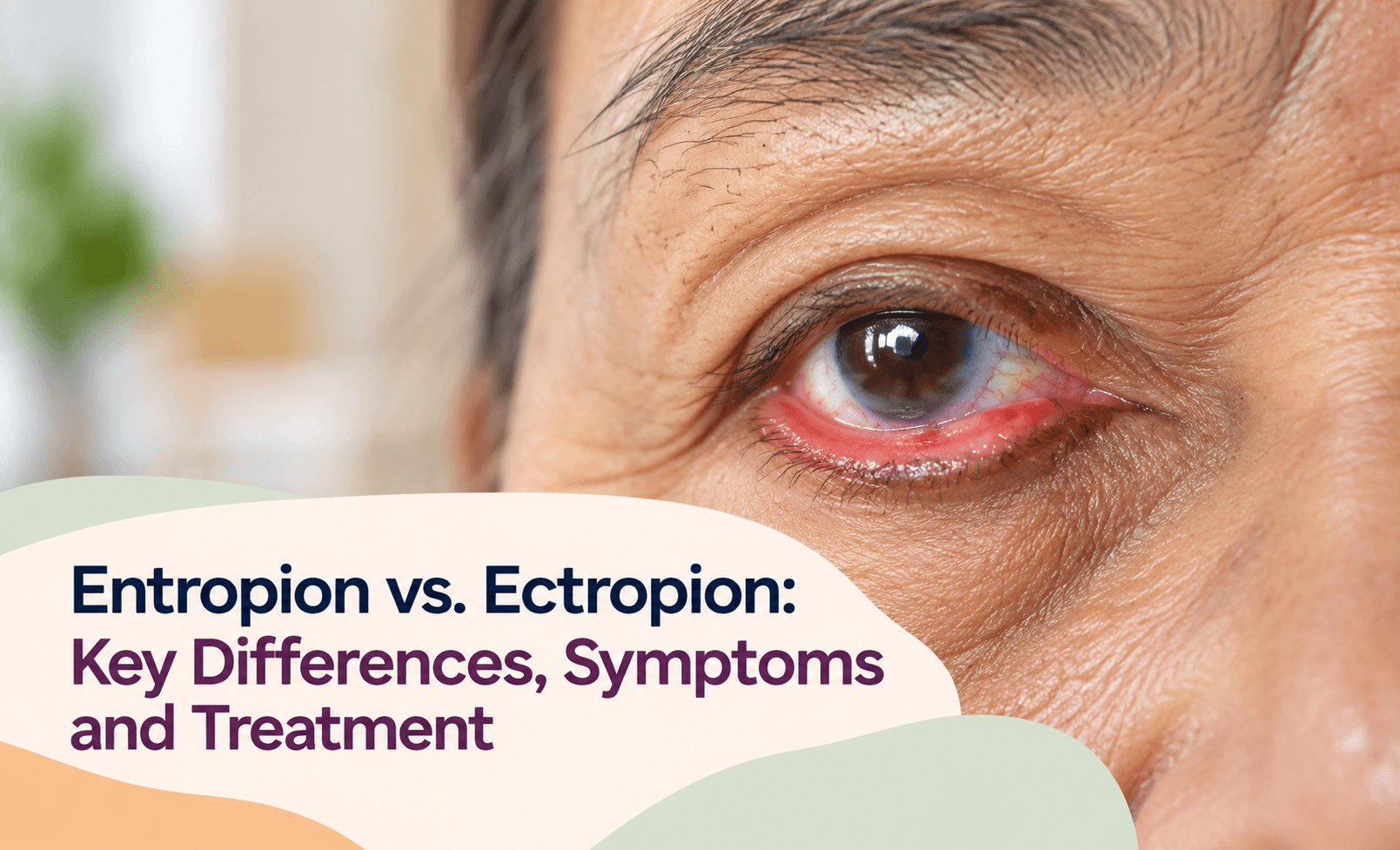
This article explains the key differences between entropion and ectropion, including their symptoms, causes, and treatment options. It highlights when to consult an eye specialist and how Dr. Pooja Y. Patel at Eye Vista Hospital, Ahmedabad, can help diagnose and treat these eyelid conditions to protect eye health and improve comfort.
Your eyelids do more than protect your eyes. They spread tears across the eye's surface, help prevent irritation, and protect the cornea from dust and injury. However, when an eyelid turns inward or outward, it can cause discomfort, excessive tearing, and potential damage to the eye.
Understanding entropion vs ectropion is important because these two eyelid conditions may appear similar at first but affect the eyes differently. Recognizing their symptoms early can help you seek appropriate treatment and protect your vision.
What Is the Difference Between Entropion and Ectropion?
Entropion and ectropion are eyelid malposition conditions that affect the normal position of the eyelid, usually the lower eyelid.
- Entropion: The eyelid turns inward, causing the eyelashes and skin to rub against the eye.
- Ectropion: The eyelid turns outward, exposing the inner eyelid surface and sometimes preventing tears from draining properly.
Both conditions can cause irritation and require an eye specialist's evaluation. However, their causes and treatment approaches may differ.
What Are the Symptoms of Entropion and Ectropion?
Entropion Symptoms
When the eyelid turns inward, eyelashes may repeatedly rub the cornea, causing irritation and discomfort.
Common entropion symptoms include:
- A sensation of something stuck in the eye
- Redness, watering, and irritation
- Sensitivity to light
- Excessive blinking or squinting
- Pain or blurred vision in more advanced cases
If left untreated, entropion can cause corneal scratches, infection, and potentially vision-threatening damage.
Ectropion Symptoms
Ectropion causes the eyelid to turn outward, leaving the eye more exposed to environmental irritants and reducing effective tear distribution.
Common ectropion symptoms include:
- Persistent watery eyes
- Redness and irritation
- Dryness or a gritty sensation
- Exposure of the inner eyelid
- Difficulty closing the eye completely in some cases
Without appropriate care, ectropion may lead to inflammation and damage to the corneal surface.
What Causes Entropion and Ectropion?
Age-related weakening of the eyelid tissues is a common cause of both conditions. Nevertheless, other factors can contribute.
Entropion may develop due to ageing, eyelid muscle weakness, scarring, inflammation, or previous injury.
Ectropion may result from age-related tissue laxity, facial nerve weakness, scarring after an injury or surgery, or congenital eyelid abnormalities.
An eye specialist can examine the eyelid position and surrounding tissues to identify the underlying cause.
Entropion Treatment vs Ectropion Treatment
The right treatment depends on the severity of the condition, its cause, and the health of the eye's surface.
Entropion Treatment
For mild cases, lubricating eye drops or ointments may help reduce irritation. Temporary measures, including eyelid taping or other specialist-recommended treatments, may provide relief.
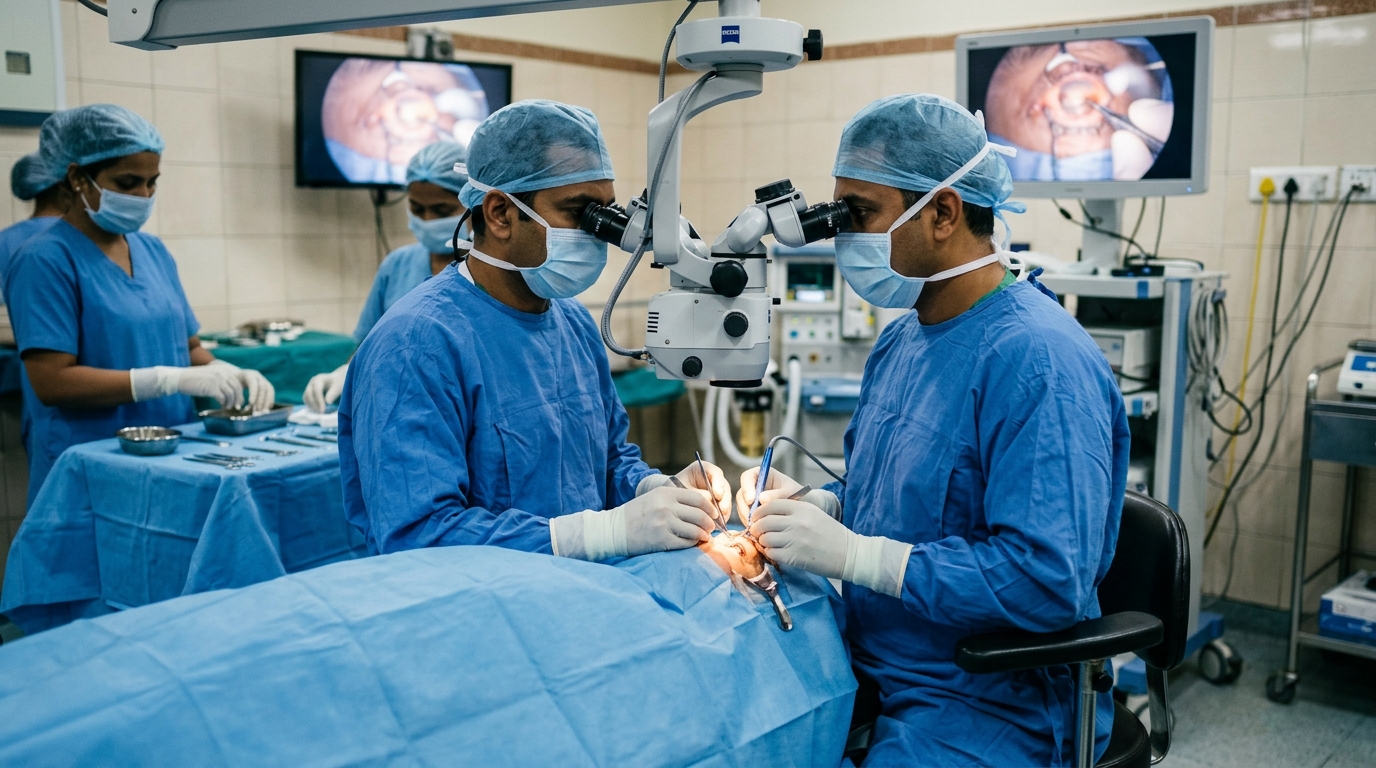
However, when the eyelashes repeatedly rub against the cornea, entropion surgery may be necessary. The procedure corrects the eyelid's position to prevent further damage and improve comfort.
Ectropion Treatment
Lubricating eye drops and ointments can help relieve dryness and protect the exposed eye surface. In selected cases, temporary eyelid support may also be recommended.
For persistent or severe cases, ectropion surgery may be required to tighten or reposition the eyelid. The surgical approach depends on whether the problem is caused by tissue laxity, scarring, or another underlying condition.
Neither condition should be managed solely with home remedies if symptoms persist.
When Should You Consult an Eye Specialist?
Seek an eye examination if you notice an inward-turning or outward-turning eyelid, persistent watering, redness, or ongoing irritation.
Arrange prompt medical assessment if you experience eye pain, light sensitivity, or changes in vision. Severe pain or sudden vision loss requires urgent medical care.
Advanced Eye Care in Ahmedabad at Eye Vista Hospital
At Eye Vista Hospital, patients can receive specialized evaluation and personalized treatment for eyelid conditions. Dr. Pooja Y. Patel, an oculoplastic surgeon with fellowship training from Aravind Eye Hospital, Madurai, specializes in eyelid reconstruction and eyelid-position abnormalities, including entropion and ectropion.
With specialized diagnostic evaluation, modern surgical techniques, and a patient-first approach, the goal is to improve eyelid function, protect the eye's surface, and support long-term eye health.
If you are experiencing symptoms of an inward-turning or outward-turning eyelid, book an appointment with Dr. Pooja Y. Patelat Eye Vista Hospital, Ahmedabad, for an individualized assessment and treatment plan.
Medical Disclaimer: This article is for educational purposes only and does not replace professional medical advice, diagnosis, or treatment. Consult a qualified eye specialist for symptoms or concerns about your eye health.
Experiencing Sudden Vision Changes or Eye Pain?
Symptoms like sudden curtain-like darkness, flashes of light, an explosion of floaters, or severe persistent eye pain warrant immediate attention.
Consult Dr. Pooja Y Patel at Eyevista
Get accurate diagnostic care with advanced ophthalmic technology at our Paldi clinic.

Dr. Pooja Y Patel
MBBS, MS (Ophthalmology), FAEH (Oculoplasty, Orbit & Ocular Oncology)
Dr. Pooja Y Patel completed fellowship training at Aravind Eye Hospital (Madurai). She is a leading specialist in eyelid reconstruction, lacrimal (tear duct) surgeries, ocular tumor management, and fa...
Clinical Conditions (Eyepedia)
Clinic Hours & Location
Monday – Saturday: 9:00 AM – 7:30 PM
Sunday: Closed (Emergency on call)
Paldi, Ahmedabad, Gujarat 380007