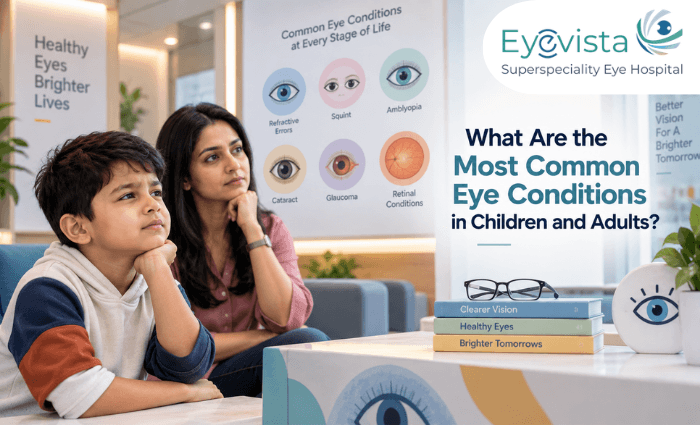
Common eye conditions can affect both children and adults, from refractive errors and squint to cataract, glaucoma, dry eye, and retinal problems. Early eye examinations can help detect conditions and support timely treatment.
Eye disorders can occur at any age, although the issues that arise among children tend to differ greatly from those that are commonly encountered by adults. There are eye disorders that affect eyesight, whereas other conditions can lead to irritation and even inflammation. Awareness of common eye conditions and their symptoms can ensure prompt action when necessary.
Eye exams are essential as some ailments may be present without any signs, especially when they are in their initial stages.
What Are the Common Eye Conditions in Children?
Healthy eyesight plays an important role in reading and learning for kids. There is a chance that kids do not know whether their eyesight is right or not.
Some of the common eye conditions in children include refractive errors, squint, amblyopia, and certain conditions affecting the cornea or retina.
Refractive Errors
Some examples of refractive eye problems among children include myopia, hyperopia, and astigmatism. Refractive eye problems result in blurry vision, inability to see the classroom blackboard, and difficulties focusing on books and computers.
If this difference is not corrected, then this will interfere with the visual development process of the child.
Squint
A squint, also known as strabismus, happens when the eyes are misaligned. One of the eyes may point towards the nose, outside, upwards, or downwards. Kids who have squints may find themselves tilting their head, closing one eye, or struggling to use their eyes together.
It is especially critical to detect the problem early on since squints can lead to amblyopia.
Amblyopia
Amblyopia, which is commonly referred to as "lazy eye," is a situation where there is abnormal visual development of one or both eyes. This could be due to squinting, a major difference in refractive power, among other reasons.
It is important to note that children have the capability to adapt to low vision in one eye. Therefore, the issue may go unnoticed by parents.
What Are the Common Eye Conditions in Adults?
Adults can experience refractive changes as well as conditions associated with ageing, health, and lifestyle. Some common eye conditions in adults may initially cause minor changes, while others require ongoing monitoring.
Cataract
A cataract occurs as a result of clouding of the eye's natural lens. The symptoms of a cataract include blurred vision, halos, color fading, and poor night vision.
If a cataract affects an individual's quality of life, then cataract surgery can be considered.
Glaucoma
Glaucoma is a disease affecting the eyes that can lead to damage to the optic nerve. In some cases, there are no early signs of the disease in its development.
Routine checks may help detect those who are susceptible to the disease.
Dry Eye
Dry eye is defined by a lack of tear production by the eye, or by excessive evaporation of tears. Complaints include burning and irritation, grittiness, watery eyes, and fluctuation of vision.
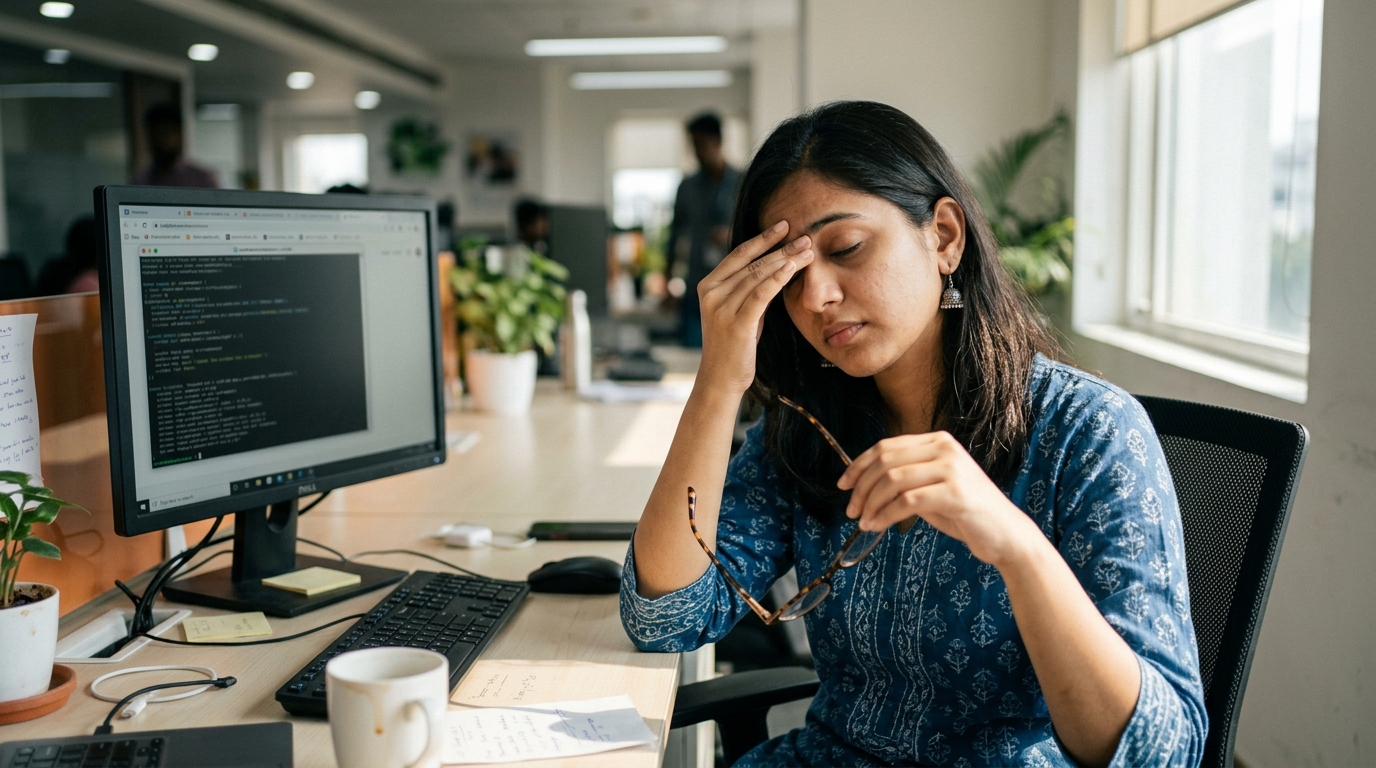
The causes include extended computer usage, environmental factors, medication, and age-related changes.
Retinal Conditions
The role of the retina is crucial in the process of changing light to information that the brain can interpret. Retinal disorders will affect either central or peripheral vision.
Vision symptoms such as flashes, floaters, distorted vision, or a curtain in the visual field require immediate medical attention.
What Symptoms Should You Watch For?
The symptoms of eye conditions can vary considerably. Blurred vision, double vision, eye pain, persistent redness, unusual watering, flashes of light, new floaters, and difficulty seeing at night are some changes that should not be ignored.
For children, behavioural signs can also be important. Holding books very close, sitting unusually close to the television, frequently rubbing the eyes, tilting the head, or avoiding reading may indicate a vision concern.
What Causes Eye Conditions?
Causes of eye conditions differ based on the nature of the problem. These include genetic, refractive, age-related, injury-related, medical conditions, and environmental causes.
For this reason, just looking at the symptoms cannot give you an indication of the cause. Through an ophthalmological examination, the disease and its degree of severity can be determined.
When Should You See an Eye Specialist?
It is essential for children as well as adults to know when to see an eye specialist. While a change in vision over time needs to be assessed, sudden loss of vision, eye pain, flashes, a sudden increase in floaters, and darkening of the vision need urgent medical care.
An assessment should also be done when parents realize that the child is exhibiting abnormal visual behavior or has misaligned eyes.
How Are Eye Conditions Treated?
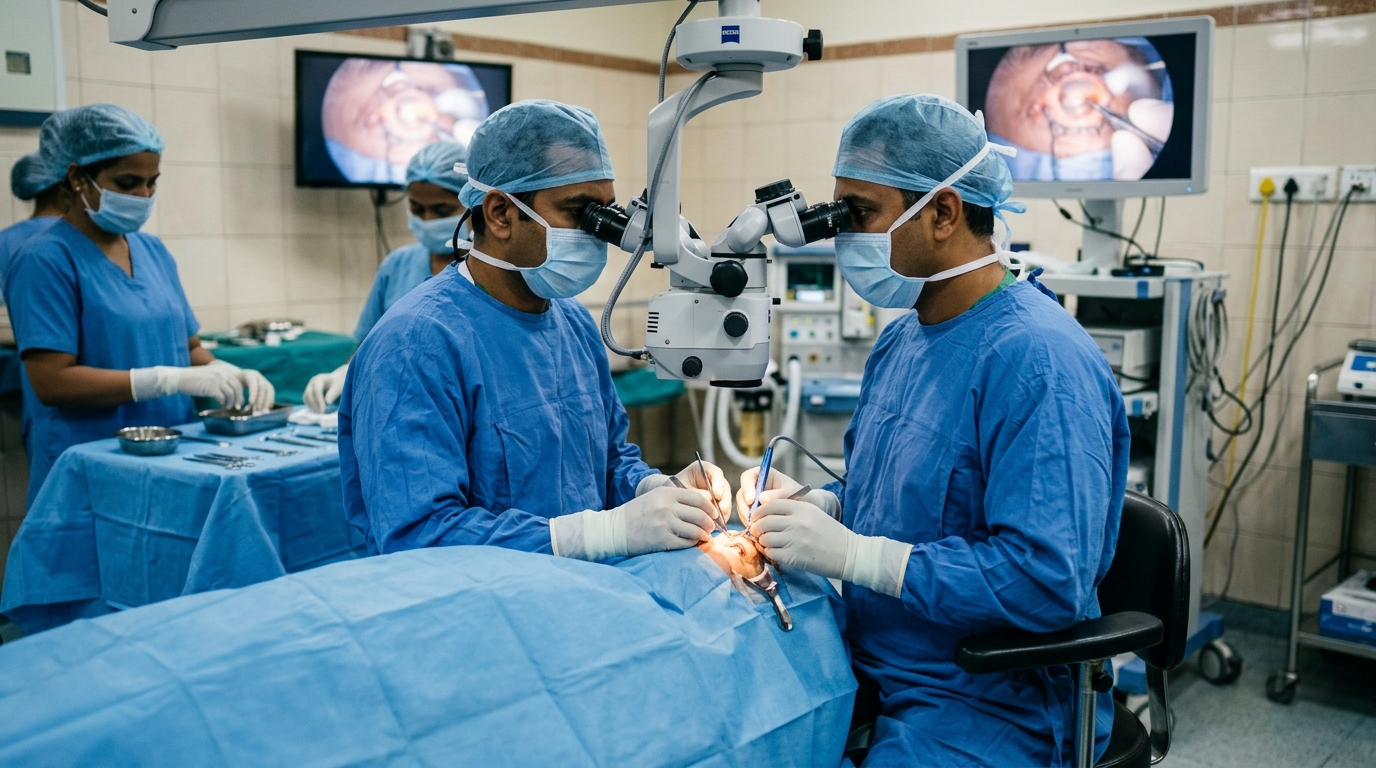
Thetreatment for eye conditions is dependent on the type of diagnosis, severity, and requirements of the individual. Treatment options may include the use of glasses, contact lenses, drugs, laser treatments, surgery, or continuous monitoring.
Here at Eyevista Eye Hospital, specialized treatments are available for a wide range of eye diseases, including Pediatric Ophthalmology and Squint, Cataract, Cornea & Refractive Surgery, Glaucoma, Retina, Oculoplasty, and Ocular Oncology.
Protect Your Family's Vision
When it comes to children having difficulties seeing properly in school or adults who have noticed changes in their sight, an early assessment might play an important role. It is possible to control many common eye conditions once they are detected at the right time.
Should you or your child experience some problems with vision or notice any other symptoms of the eye, please book an appointment at Eyevista Eye Hospital. The experts will diagnose the problem and help you take proper care of your vision.
If you need to seek medical attention for any changes in vision in yourself or your children, then booking an appointment at Eyevista Eye Hospital will help to solve your problems.
Experiencing Sudden Vision Changes or Eye Pain?
Symptoms like sudden curtain-like darkness, flashes of light, an explosion of floaters, or severe persistent eye pain warrant immediate attention.
Consult Dr. Pooja Y Patel at Eyevista
Get accurate diagnostic care with advanced ophthalmic technology at our Paldi clinic.

Dr. Pooja Y Patel
MBBS, MS (Ophthalmology), FAEH (Oculoplasty, Orbit & Ocular Oncology)
Dr. Pooja Y Patel completed fellowship training at Aravind Eye Hospital (Madurai). She is a leading specialist in eyelid reconstruction, lacrimal (tear duct) surgeries, ocular tumor management, and fa...
Clinical Conditions (Eyepedia)
Clinic Hours & Location
Monday – Saturday: 9:00 AM – 7:30 PM
Sunday: Closed (Emergency on call)
Paldi, Ahmedabad, Gujarat 380007