This article explains refractive errors in children, including myopia, hyperopia, and astigmatism, along with common symptoms and diagnostic methods. It highlights the importance of early eye examinations to support healthy vision development and school performance, while outlining treatment and follow-up options at Eye Vista Hospital.
Children with vision problems often have difficulty learning and growing like their peers. Many eye problems in children occur when the eye is unable to focus light on the retina and are therefore termed refractive errors. The symptoms of these errors are often mistaken or ignored because children don’t always know that there is something wrong with their vision. Refractive errors in children are sometimes detected only when a parent or teacher recognizes that a child is having school-related behavioral problems.
Children with eye problems need a comprehensive eye examination to identify the visual problems and the most appropriate means to correct them.
What Is a Refractive Error in Children?
When the shape of the eye or elements of the eye's optical system prevent light from projecting sharply on the retina, normal vision is not attained. As a result, different kinds of refractive errors occur. There are three main refractive errors in children; myopia (nearsightedness), hyperopia (farsightedness), and astigmatism.
- Myopia in Children: A child can only see nearby objects clearly and has trouble distinguishing objects in the distance.
- Hyperopia in children can make close-up tasks more difficult, although mild hyperopia may not always cause noticeable symptoms.
- Astigmatism in children occurs when the cornea or lens has an irregular shape, which can cause blurred or distorted vision.
What Are the Symptoms of Refractive Errors in Children?
Refractive errors in children are not easily detected. This is due to the fact that children normally do not describe their vision in terms of being blurred or fuzzy since they do not realize that their eyesight is poor or that others may have a different view of objects.
Possible signs include:
- Squinting to see distant objects
- Being extremely close to the television or screen
- Holding books unusually close
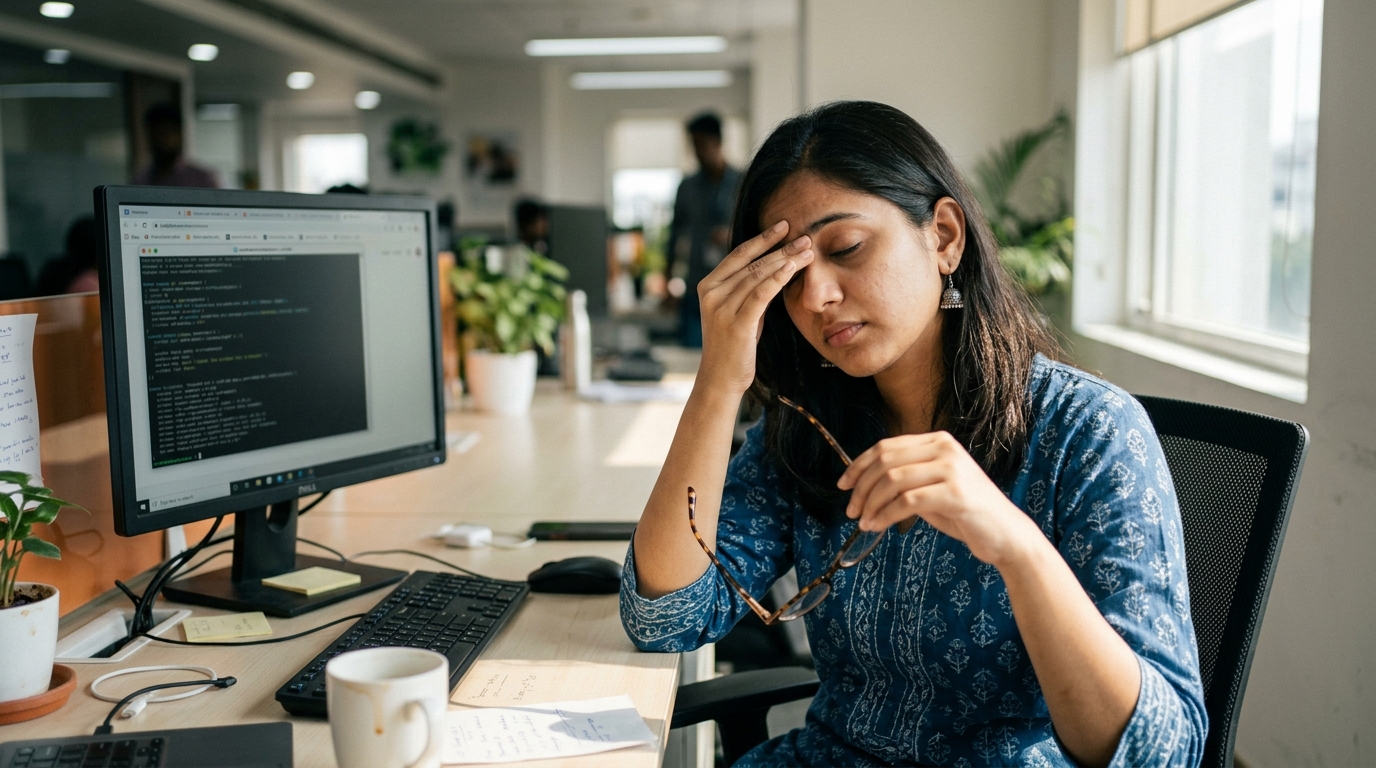
- Frequent headaches or eye strain
- Difficulty reading the classroom board
- Frequent eye rubbing
- Avoiding reading or visually demanding activities
There could be other childhood visual problems that children suffer from that can cause similar symptoms, therefore necessitating an assessment by a professional who will diagnose the exact issue.
How Are Refractive Errors Diagnosed?
Parents are always curious about how a refractive error is diagnosed among children, particularly since they cannot describe their experience visually.
A child's eye examination may include age-appropriate vision testing, assessment of eye alignment, examination of the eye structures, and measurement of how the eye focuses light. For younger children, doctors may use specialised techniques to estimate the prescription even when the child cannot read letters or numbers.
In some cases, dilating eye drops may be used to temporarily relax the focusing muscles and obtain a more accurate measurement of the child's refractive error.
Why Is Early Diagnosis Important?
An undiagnosed refractive error in children could affect the child’s visual development and affect their performance in school and other activities. Refractive errors in both eyes could be different, which increases the chances of developing amblyopia, known as a lazy eye condition.
Eye examinations might prove helpful in identifying any changes in vision as the child grows older. Those children who are wearing glasses or have a family history of severe refractive errors will require follow-ups as advised by their eye doctor.
How Are Refractive Errors Treated?
The treatment depends on the age of the child, the type of refractive problem, the degree of the refractive problem, and the general health of the eyes.
In the case of myopia in children, follow-ups will be necessary to track the changes in prescription and development of the eyes. The same applies to the one who has astigmatism in children or severe cases of hyperopia.
When Should a Child Have an Eye Examination?
Take note if your child squints at all times, has trouble seeing the chalkboard, gets headaches, or refuses to read. There are also other symptoms that indicate your child might have a problem with his/her vision and requires an exam, including sitting too close to the TV or covering one eye while watching TV. During a regular checkup, your child's doctor may have your child screened for vision issues. These issues may go unnoticed by your child.
Children can undergo specialized eye exams to diagnose various refractive errors at Eyevista Eye Hospital. It is important to have refractive errors in children treated, as they can affect their normal vision development. If there are signs and symptoms associated with refractive errors in your child, you should book an appointment with a pediatric eye doctor.
Experiencing Sudden Vision Changes or Eye Pain?
Symptoms like sudden curtain-like darkness, flashes of light, an explosion of floaters, or severe persistent eye pain warrant immediate attention.
Consult Dr. Ankit Shah at Eyevista
Get accurate diagnostic care with advanced ophthalmic technology at our Paldi clinic.

Dr. Ankit Shah
MBBS, DO, DNB, FICO (UK), Fellowship in Pediatric Ophthalmology & Strabismus
Dr. Ankit Shah is a renowned Pediatric Ophthalmologist and Squint Specialist at Eyevista Superspeciality Eye Hospital in Ahmedabad. With advanced fellowship training, he specializes in treating comple...
Clinical Conditions (Eyepedia)
Clinic Hours & Location
Monday – Saturday: 9:00 AM – 7:30 PM
Sunday: Closed (Emergency on call)
Paldi, Ahmedabad, Gujarat 380007